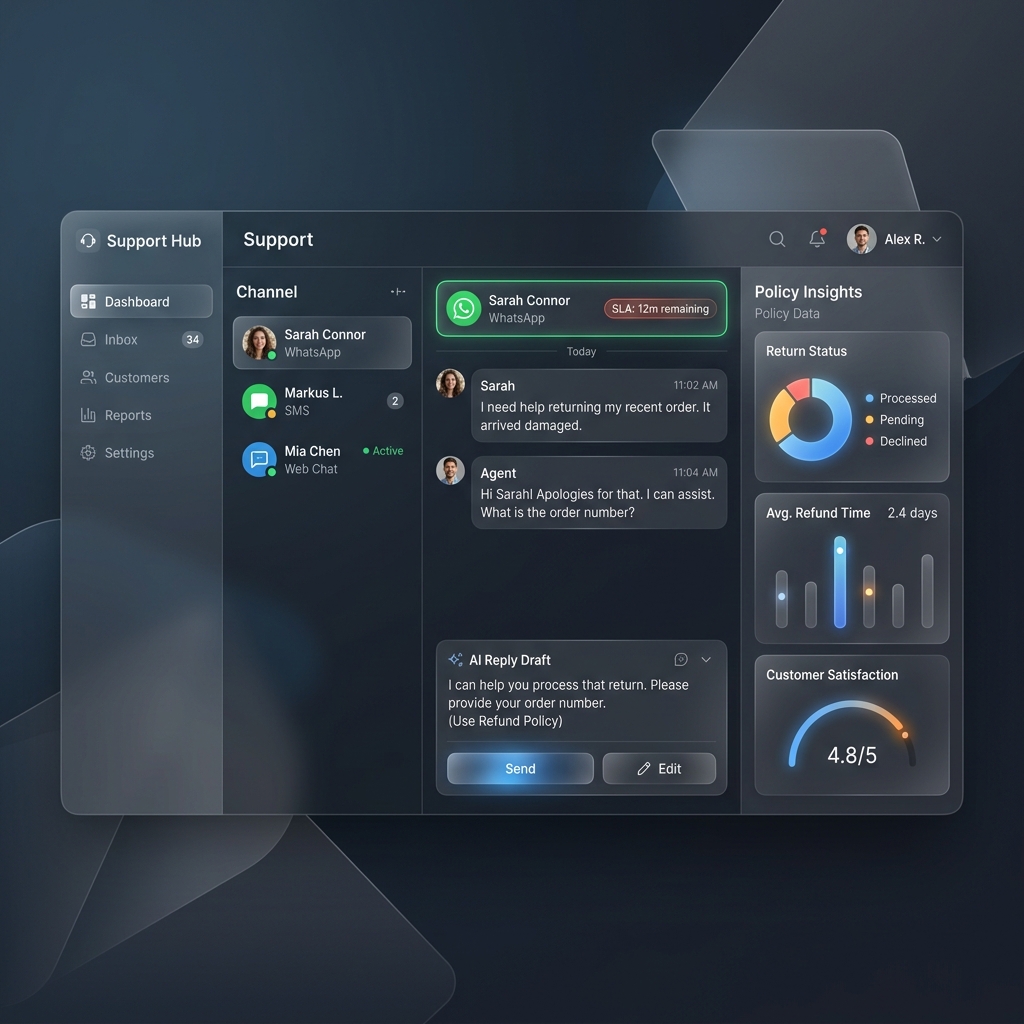
Customer expectation is at an all-time high. When consumers reach out to a business—whether it is via WhatsApp to ask about product sizing, email to request a refund, or a web chat widget on a homepage—they expect immediate, context-aware responses. Yet, behind the scenes, support teams are often bogged down by operational silos.
Forcing agents to jump between separate applications to manage different channels wastes time and fragments the customer profile. An omnichannel customer engagement platform eliminates this inefficiency by pulling all incoming conversations into one unified agent workspace.
"An agent who has to switch tabs is an agent who is losing productivity. The magic happens when voice logs, WhatsApp messages, and email threads are merged into a single timeline. It saves time and saves the customer's patience."
The Cost of Tab-Switching
Industry research shows that the average customer service agent switches between up to six different platforms during a single inquiry thread. Answering a simple question like, "I bought a shirt on Web Chat but need to change the size via SMS," can require checking the chat dashboard, checking the CRM, checking the shipping ledger, and opening an outbound SMS tool.
A unified shared inbox eliminates these transitions. When WhatsApp, SMS, Web Chat, and Email are centralized, agents can handle customer contexts dynamically. AI helper engines can scan the conversation history and draft suggested replies, allowing agents to solve tickets with a single click.
Measurable SLA Improvements
Data from client campaigns running on unified interfaces shows immediate metric improvements:
- SLA Velocity: Average response times (Service Level Agreements) drop by up to 40% within the first month of unifying the workspace.
- Resolution Rates: Up to 35% more support tickets are resolved on the first contact because agents have full profile views immediately.
- Team Collaboration: Assigning tickets, transferring chat ownership, and adding internal notes happens within the ticket thread, minimizing internal emails.
Conclusion
Centralization is the most direct path to support efficiency. Unifying all customer channels under a single shared workspace reduces SLA response times, cuts tool overload for support representatives, and delivers a premium experience that builds long-term brand loyalty.