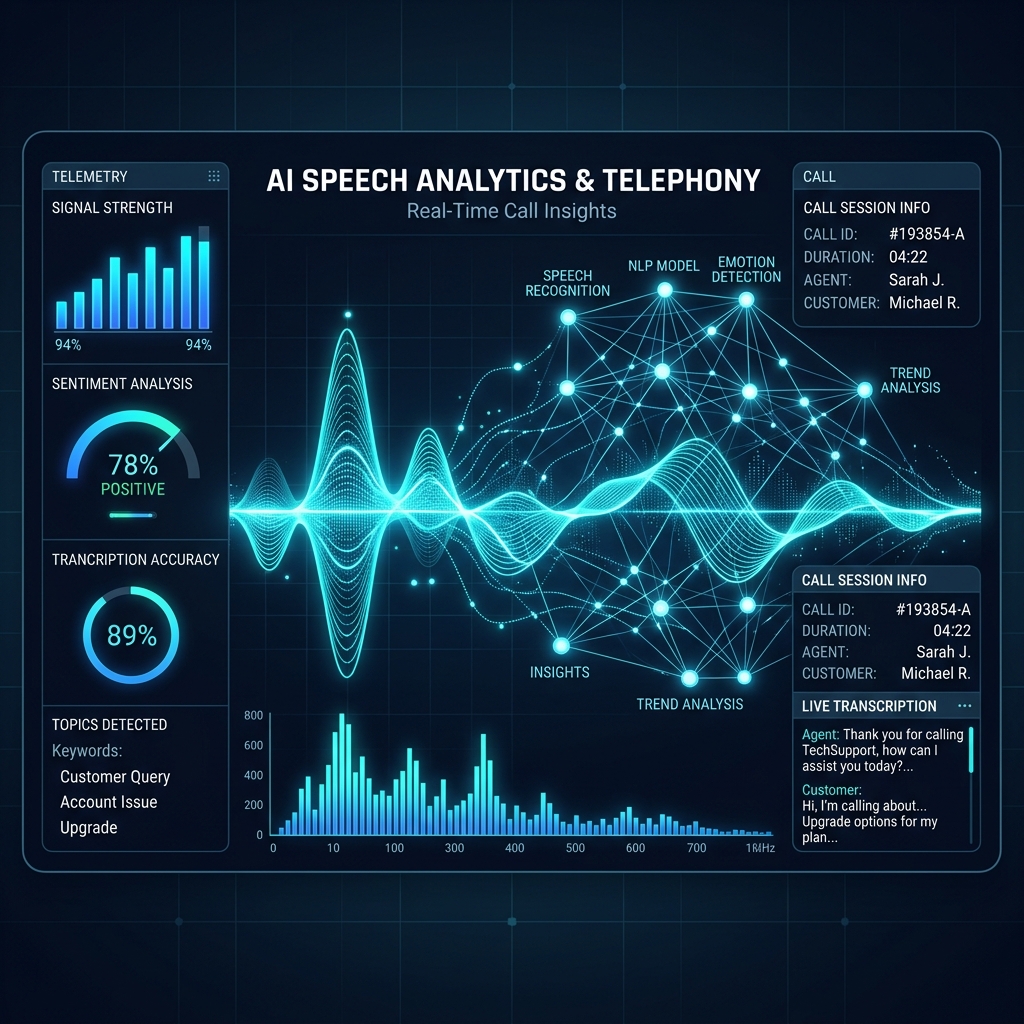
In modern enterprise telecommunications, handling voice streams with sub-millisecond network latencies is a complex engineering challenge. When managing thousands of concurrent voice sessions for client campaigns, traditional voice channels collapse under the load. Building high-capacity call centers requires deep architectural optimization across cloud environments and SIP trunk protocols.
SIP (Session Initiation Protocol) trunking is the digital bridge that connects an organization’s internal VoIP systems to the Public Switched Telephone Network (PSTN). By running SIP on high-capacity concurrent SIP connections, businesses completely bypass local phone line constraints, allowing instant, dynamic scaling of telephone traffic based on representative volumes.
"Infrastructure is the heartbeat of customer communication. If a call drops, or if there is even a half-second of audio lag, the conversational thread is broken. Zero-latency network engineering is what permits natural, flowing speech automation."
Real-Time Dynamic Load Balancing
To guarantee a 99.99% core network uptime, we utilize a globally distributed node architecture. Outbound and inbound voice sessions do not run through a single server node. Instead, Session Border Controllers (SBCs) continuously analyze network traffic and dynamically route voice paths to the closest physical server node.
If a server node in a specific geographic cluster experiences high bandwidth load or a network bottleneck, load balancing algorithms instantly shift subsequent call setups to alternate fallback clusters. This automatic rerouting happens within milliseconds, keeping agent streams clear and uninterrupted.
Key Features of Modern High-Capacity Networks
- Low-Latency Codecs: We employ high-fidelity Opus and G.711 compression algorithms to keep packet sizes small and audio quality premium.
- Redundant SIP Trunks: Multiple carrier connections ensure backup paths are always active, protecting campaigns from service provider outages.
- SIP Security Firewalls: Specialized encryption and monitoring tools scan signaling traffic to protect call streams from spoofing or unauthorized intercepts.
Conclusion
Investing in resilient infrastructure is critical for scale. By deploying state-of-the-art SIP trunk architectures, real-time load balancers, and distributed cloud nodes, Rocketconnect.ai provides the solid network foundation required for enterprise virtual assistants and high-volume outbound dialers to run smoothly, around the clock.